Ballot Review Checklist
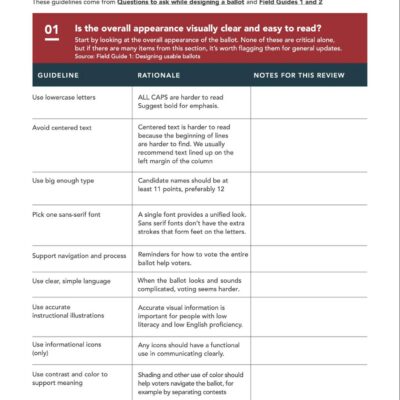
This checklist presents 7 questions to ask when reviewing a ballot.
What you’ll need
- A download of the Ballot Review Checklist
- Software to edit the ballot
Getting started
This checklist presents 7 questions to ask when reviewing a ballot. Asking these questions will give you a process for reviewing a ballot and thinking about the voter experience of understanding, marking, and verifying their selections. The questions ask how all of the elements on the ballot come together to create an effective experience for voters.
Using the toolUsing the tool
This checklist is divided into 7 sections to help you review the design of your ballot in a structured way.
The checklist includes specific guidelines and rationale for the following 7 categories:
- Language access requirements
- Overall appearance
- Consistent and without bias
- Clear separation of contests
- Easy to navigate
- Necessary instructions
- Clear instructions
Customizing for your office
Any tips for customizing this resource for my office?
Plan that your team uses this checklist before you finalize the ballot so issues are caught early. You can also highlight or adapt the items that matter most in your jurisdiction so reviewers know exactly what to focus on.
How do I know if this resource is helping?
You’ll know it’s making a difference if common design errors show up less often in reviews and the ballot production process requires fewer last-minute fixes. You may also notice that staff feel more confident and ballots receive fewer questions or corrections from stakeholders.
Which Standards of Excellence does this resource support?
- Ballots and Audits
- Communications
Which Values of Excellence does this resource support? Why?
Values for the U.S. Alliance for Election Excellence define our shared vision for the way election departments across the country can aspire to excellence. These values help us navigate the challenges of delivering successful elections and maintaining our healthy democracy.
Alliance values are nonpartisan and designed by local election officials, designers, technologists and other experts to support local election departments.
You may find this tool especially helpful for this Value:
- High integrity. Clear, well-designed ballots reduce voter errors and ensures that every vote is counted as intended.
To learn more about the Values for Election Excellence, and to see the full list, visit the Alliance website.
Sharing feedbackSharing feedback
How was this resource developed?
This resource has been piloted in an election. Share your experience with this resource and improve it for your peers by reaching out to support@ElectionExcellence.org.
How do I stay in touch?
- For the latest news, resources, and more, sign up for our email list.
- Have a specific idea, piece of feedback, or question? Send an email to support@ElectionExcellence.org